


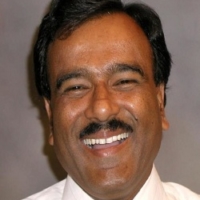
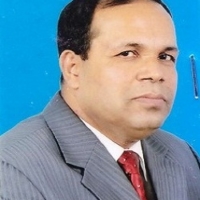
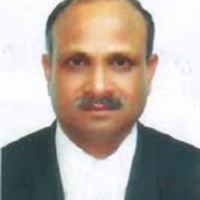
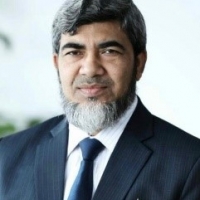
Message


What We Do?
Featured Posts of The Month
December 2016

First Test Post
Doctor is an academic title that originates from the [...]

Second Test Post
The doctorate (Latin: doceō, I teach) appeared in medieval [...]

Third Test Post
The earliest doctoral degrees (theology, law, and medicine) reflected [...]

Second Video Post
The urinary system, also known as the renal system, [...]
News

New Year 2017
New Year is the time at which a […]
16th December
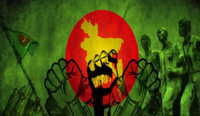
Victory day (Bengali: বিজয় দিবস […]

26th March
Independence Day is commonly associated with parades, […]

21 February
International Mother Language Day was proclaimed by the General Conference […]
Photography
Video News
Events Calender
4 February – World Cancer Day
Each year on 4 February, WHO and International Agency for Research on Cancer (IARC) supports Union for International Cancer Control (UICC) to promote ways to ease the global burden of cancer.
Cancer is the uncontrolled growth and spread of cells. It can affect almost any part of the body. The growths often invade surrounding tissue and can metastasize to distant sites.
Many cancers can be prevented by avoiding exposure to common risk factors, such as tobacco smoke. In addition, a significant proportion of cancers can be cured, by surgery, radiotherapy or chemotherapy, especially if they are detected early.
Taking place under the tagline ‘We can. I can.’, World Cancer Day 2016-2018 will explore how everyone – as a collective or as individuals – can do their part to reduce the global burden of cancer.
21 February – International Mother Language Day
In line with Sustainable Development Goal 4 on education of the 2030 Agenda, this year’s theme emphasizes the importance of appropriate languages of instruction, usually mother tongues, in the early years of schooling. It facilitates access to education – while promoting fairness – for population groups that speak minority and indigenous languages, in particular girls and women; it raises the quality of education and learning achievement by laying emphasis on understanding and creativity, rather than on rote and memorisation.
8 March – International Women’s Day
International Women’s Day is a time to reflect on progress made, to call for change and to celebrate acts of courage and determination by ordinary women who have played an extraordinary role in the history of their countries and communities.
21 March – International Day of Forests
This global celebration of forests provides a platform to raise awareness of the importance of all types of forests and of trees outside forests.
Forests cover one third of the Earth’s land mass, performing vital functions around the world. Around 1.6 billion people – including more than 2,000 indigenous cultures – depend on forests for their livelihood.
22 March – World Water Day
Today, half of the world’s workers – 1.5 billion people – work in water-related sectors. Moreover, nearly all jobs, regardless of the sector, depend directly on water. Yet, despite the indelible link between jobs and water, millions of people whose livelihoods depend on water are often not recognized or protected by basic labour rights.
26 March – Independence Day of Bangladesh
26 March is observed as Independence Day to commemorate the fact that Sheikh Mujibur Rahman (our first president and one of the leaders of the independence movement) declared independence in the late hours of 25 March 1971 (or the early hours of 26 March). The people of East Pakistan no longer considered themselves a part of Pakistan but rather citizens of the new country of Bangladesh.
7 April – World Health Day
Our goal is to build a better, healthier future for people all over the world. Working through offices in more than 150 countries, WHO staff work side by side with governments and other partners to ensure the highest attainable level of health for all people.
Together we strive to combat diseases – infectious diseases like influenza and HIV and noncommunicable ones like cancer and heart disease. We help mothers and children survive and thrive so they can look forward to a healthy old age. We ensure the safety of the air people breathe, the food they eat, the water they drink – and the medicines and vaccines they need.
28 April – World Day for Safety and Health at Work
Today, many workers are facing greater pressure to meet the demands of modern working life. Psychosocial risks such as increased competition, higher expectations on performance and longer working hours are contributing to the workplace becoming an ever more stressful environment.
1 May – International Workers’ Day
Labour Day (Labor Day in the United States) is an annual holiday to celebrate the achievements of workers. Labour Day has its origins in the labour union movement, specifically the eight-hour day movement, which advocated eight hours for work, eight hours for recreation, and eight hours for rest.
14 June – World Blood Donor Day
Blood donation by 1% of the population can meet a nation’s most basic requirements for blood. 108 million blood donations are collected globally, half of these are in high-income countries.62 countries collect 100% of their blood supply from voluntary, unpaid blood
14 November – World Diabetes Day
Globally, an estimated 422 million adults were living with diabetes in 2014, compared to 108 million in 1980. The global prevalence of diabetes has nearly doubled since 1980, rising from 4.7% to 8.5% in the adult population. This reflects an increase in associated risk factors such as being overweight or obese. Over the past decade, diabetes prevalence has risen faster in low and middle-income countries than in high-income countries.
1 December – World AIDS Day
In the lead-up to World AIDS Day 2016, the hands up for #HIVprevention campaign will explore different aspects of HIV prevention and how they relate to specific groups of people, such as adolescent girls and young women, key populations and people living with HIV.
A new report by UNAIDS Get on the Fast-Track: the life-cycle approach to HIV shows that countries are getting on the Fast-Track, with an additional one million people accessing treatment in just six months (January to June 2016). By June 2016, around 18.2 million [16.1 million–19.0 million] people had access to the life-saving medicines, including 910 000 children, double the number five years earlier. If these efforts are sustained and increased, the world will be on track to achieve the target of 30 million people on treatment by 2020.
The report was launched on 21 November 2016 in Windhoek, Namibia, by the President of Namibia, Hage Geingob and the Executive Director of UNAIDS, Michel Sidibé.
16 December – Victory day of Bangladesh
Victory day (Bengali: বিজয় দিবস Bijôy Dibôs) is a national holiday in Bangladesh celebrated on December 16 to commemorate the victory of the Allied forces High Command over the Pakistani forces in the Bangladesh Liberation War in 1971. The Commanding officer of the Pakistani Forces General AAK Niazi surrendered with his forces to the Allied forces commander Lt. Gen. Jagjit Singh Aurora, which marked ending the 9 month-long[1] Bangladesh Liberation War and 1971 Bangladesh genocide and officially secession of East Pakistan into Bangladesh.
Most Shared Posts
Second Video Post
The urinary system, also known as the renal system, consists of the kidneys, ureters, bladder, and the urethra. Each kidney consists of millions of functional units called nephrons. [...]
Third Test Post
The earliest doctoral degrees (theology, law, and medicine) reflected the historical separation of all university study into these three fields. Over time the D.D. has gradually become less common [...]
Second Test Post
The doctorate (Latin: doceō, I teach) appeared in medieval Europe as a license to teach (Latin: licentia docendi) at a medieval university. Its roots can be traced to the [...]





First Test Post
Doctor is an academic title that originates from the Latin word of the same spelling and meaning.The word is originally an agentive noun of the Latin verb docēre 'to teach'. [...]